.png)


The Gut-Skin Connection: What Beauty Professionals Should Know About Nutrition, Inflammation and Healthy Hair
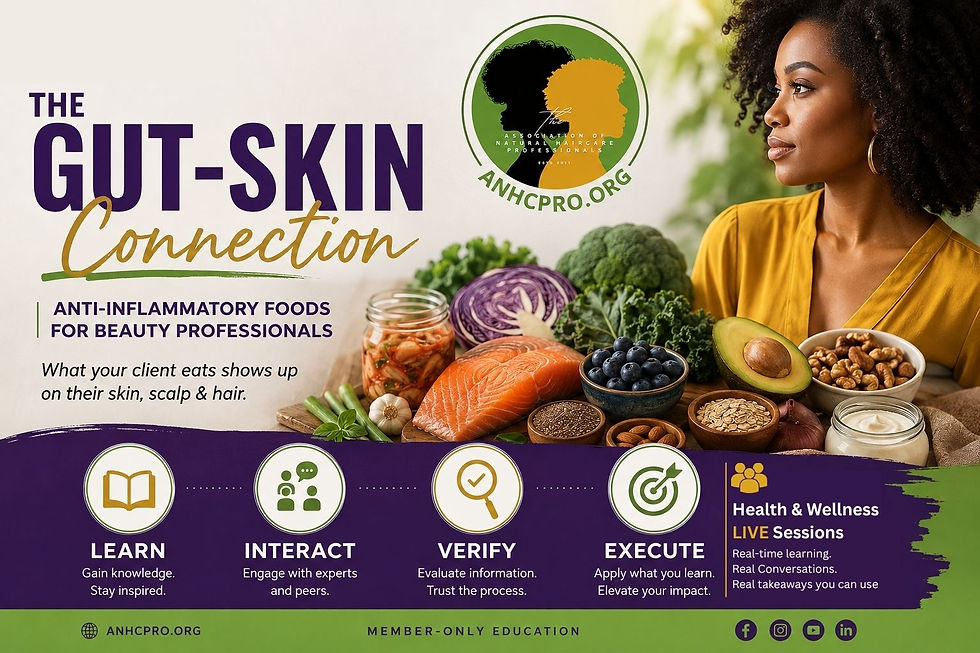
Your client may come to you because of dry hair, scalp irritation, excessive shedding, breakouts or changes in their skin. While your first instinct may be to look at products, treatments and their beauty routine, another factor may be worth discussing: what they are eating.
During an ANHC PRO Health & Wellness LIVE session, Deeana Tate explored The Gut-Skin Connection: Anti-Inflammatory Foods for Beauty Professionals and how internal health can show up in the skin, scalp and hair.
Deeana brings both beauty and wellness experience to the conversation. She is a licensed cosmetologist with over 15 years of experience, a certified health and wellness coach, founder and president of the nonprofit Eat Well to Live Well, and author of You, Yes, You: Comprehensive Self-Care for a Busy Lifestyle and the healthy cooking cookbook A Dash of Deluxe.
Her message for beauty professionals was important: we do not diagnose or prescribe, but we can educate, observe and connect clients with the right resources.
Beauty Really Can Start From Within
The gut microbiome is the community of microorganisms living throughout the digestive tract. As Deeana explained, gut health can influence inflammation, nutrient absorption and other processes that may eventually show up in the skin, scalp and hair.
That connection can be relevant to concerns such as acne, eczema, scalp inflammation, dandruff, dry or dull hair, shedding and slow hair growth.
For beauty professionals, the takeaway isn't to determine whether a client's gut is causing a particular condition. It's to recognize that healthy hair and skin can be influenced by more than products and services.
Sometimes the conversation needs to go beyond, “What products are you using?”
What's on the Plate Matters, Too
Deeana identified sugar, refined carbohydrates, ultra-processed foods and excess alcohol among the dietary choices that may contribute to inflammation.
She also shared a wide range of foods that can support a more anti-inflammatory diet, including:
Omega-3-rich foods: salmon, sardines, walnuts, flaxseeds and chia seeds
Colorful fruits and vegetables: berries, citrus fruits, broccoli, spinach and avocado
Gut-friendly foods: yogurt, kefir, kimchi and sauerkraut
Fiber-rich foods: oats, lentils, apples, onions and other plant foods
Healthy fats: extra virgin olive oil, nuts and seeds
Nutrients including iron, zinc, biotin and vitamin D are also important to healthy skin and hair. However, suspected deficiencies—particularly when a client is experiencing persistent hair loss or other significant changes—should be evaluated by an appropriate healthcare professional.
Don't Forget Hydration
Hydration was another major part of Deeana's message. Adequate water intake supports the skin and overall wellness, while dehydration can contribute to skin appearing dull and less plump.
Beauty businesses can even bring that wellness mindset into the client experience.
Instead of relying exclusively on chips, candy and wine, salons can consider offering options such as whole fruit, lower-sodium popcorn, unsalted nuts and fruit-infused water.
It is a small change, but one that can reinforce the idea of beauty and wellness working together.
Try a Simple Four-Week Anti-Inflammatory Reset
One of the most useful tools Deeana shared was a simple four-week approach that beauty professionals can use as an educational resource or conversation starter.
Week 1: Remove the biggest offenders.
Reduce sugary drinks, processed snacks and excess alcohol, and begin replacing refined grains with whole grains.
Week 2: Add anti-inflammatory staples.
Add oily fish, nuts or seeds, colorful vegetables and fruit.
Week 3: Introduce gut-friendly foods.
Incorporate fermented foods such as yogurt, kefir, kimchi or sauerkraut along with foods such as garlic, onions and leeks.
Week 4: Sustain and review.
Continue the healthier habits and pay attention to changes in the skin, scalp, hair and overall energy.
For beauty professionals, the reset can also become an ongoing client conversation. A client can take the information home, make changes that work for them and check in during a future appointment.
How Do You Bring Up Nutrition Without Overstepping?
You don't want to look at a client and announce that their diet is causing their hair problem. Not only could that be incorrect, it crosses the boundary between beauty education and medical advice.
Deeana suggested beginning with what you actually observe.
If a longtime client's hair suddenly seems drier than usual, for example, mention the change and allow the client to respond. Their answer may naturally open a conversation about stress, lifestyle, nutrition or other changes.
You can also introduce information without making assumptions:
“Have you heard about the connection between gut health and the scalp?”
That opens a door without telling the client what is wrong with them.
The beauty professional's role is to educate and signpost—not diagnose or prescribe.
Build a Wellness Referral Network
Sometimes the most valuable thing you can provide a client is the right referral.
Consider building relationships with registered dietitians or nutrition professionals, trichologists, hair-loss specialists, dermatologists and other qualified healthcare providers.
For professionals serving Black clients, having trusted dermatology resources can be particularly valuable when clients need specialized support for hair and scalp concerns.
And when referring to professionals who offer services similar to your own, make sure the relationship is truly collaborative. Discuss how referrals will work so you're expanding the client's care team without unnecessarily losing the client relationship.
Beauty Care Doesn't Exist in Isolation
Understanding the gut-skin connection doesn't require becoming a nutritionist.
It means recognizing that nutrition, hydration, inflammation, stress and overall wellness may intersect with what you see behind the chair. That knowledge can help you ask better questions, educate clients more effectively and recognize when another professional needs to become part of the conversation.
Sometimes the journey to healthier-looking hair, skin and scalp doesn't begin with another product.
Sometimes it begins in the kitchen.
Keep Learning With ANHC PRO
Health & Wellness LIVE is part of ANHC PRO’s member-only Club LIVE programming, where beauty professionals can learn from experts, ask questions and explore ideas they can put to work in their businesses and client relationships.
LIVE stands for Learn. Interact. Verify. Execute.
ANHC PRO members: join us for an upcoming Health & Wellness LIVE session and continue building the knowledge and resources that help you better serve your clients.


Comments