.png)


Holistic Healing, Herbal Remedies & Sustainability: A Wellness Approach for Beauty Professionals
The beauty industry is evolving. Today’s clients are looking beyond quick fixes and surface-level beauty. They are increasingly seeking products, services, and professionals who understand the connection between beauty, wellness, and sustainability.
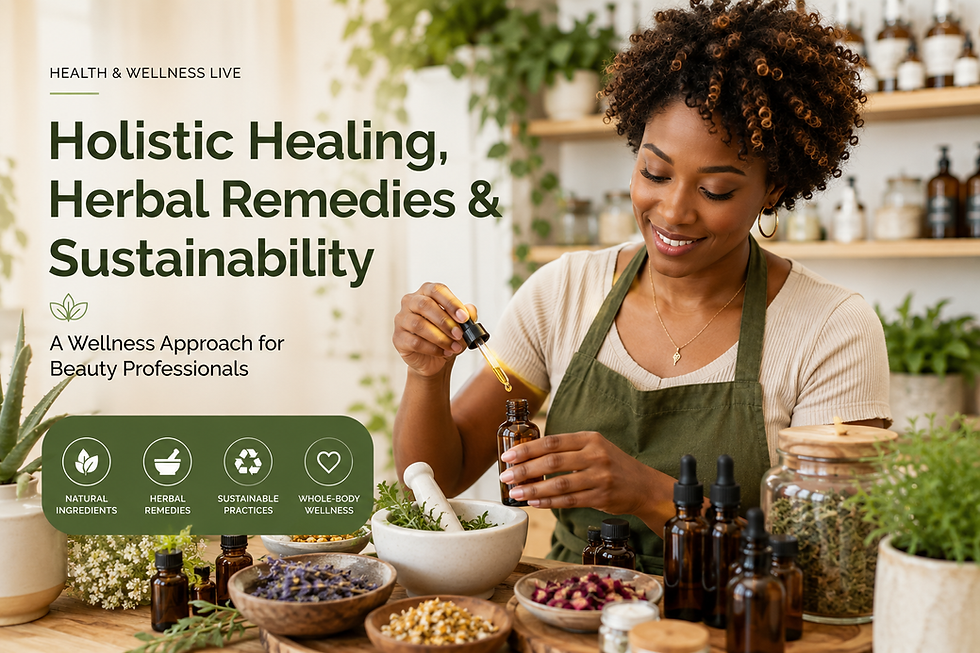
That was the focus of ANHC PRO’s recent Health & Wellness LIVE session led by Deeana Tate, Chair of ANHC PRO’s Health & Wellness Division, licensed cosmetologist, wellness coach, and founder of Beaute’ de la dame D LLC and Eat Well 2 Live Well Inc. During the session, Deeana explored how beauty professionals can incorporate holistic healing, herbal remedies, and sustainable practices into their businesses while creating stronger outcomes for clients.
Beauty Starts Beyond the Surface
One of the biggest takeaways from the session was the reminder that skin and hair health often reflect what is happening internally.
“Our skin health is a reflection of our internal health.”
Deeana emphasized that nutrition, hydration, sleep, stress, and lifestyle all influence the health and appearance of the skin. She explained that holistic healing takes a whole-body approach, considering physical, emotional, and lifestyle factors rather than focusing only on symptoms.
For beauty professionals, this means client conversations matter. Understanding stress levels, wellness habits, and lifestyle factors can help professionals better support clients and personalize services. According to Deeana, education and consultation are key to delivering meaningful results.
Why This Matters for Beauty Professionals
Holistic beauty is not just about what products are used—it is about understanding the client as a whole person. By asking thoughtful questions and learning more about lifestyle habits, beauty professionals can better support healthy outcomes for skin, scalp, and hair.
Sustainability Is Becoming the New Standard
Sustainability is no longer a niche trend—it is increasingly becoming an expectation.
“We’re living in a society now that people are just wanting the most organic form of everything they can possibly have.”
According to Deeana, clients are actively seeking cleaner, more ethical beauty experiences. Professionals who embrace wellness-focused and environmentally conscious practices may be more likely to build trust and long-term client loyalty.
During the session, Deeana highlighted practical ways salons and beauty businesses can become more eco-conscious, including:
Choosing organic and natural ingredients
Using cruelty-free and vegan products
Selecting biodegradable formulas and refillable packaging
Reducing single-use plastics
Conserving water and energy in salon operations
These changes, she explained, are not only better for clients—they are also better for the environment and align with growing wellness trends.
Herbal Remedies: Ancient Practices with Modern Benefits
Herbal remedies and essential oils have been used for centuries and continue to play an important role in holistic skincare and wellness.
“Herbal remedies are plant-based healing ingredients, and they’ve been used for centuries in skincare.”
Deeana explained that many natural ingredients are rich in vitamins and antioxidants while providing a gentler alternative to harsher chemical-based products.
Some of the essential oils discussed during the session included:
Chamomile: Known for its gentle, soothing properties.
Lavender: Often used for calming and relaxation.
Rosemary: Supports stimulation and clarity.
Tea Tree: Offers antimicrobial and purifying benefits.
Peppermint: Provides a cooling sensation and immune-support benefits.
Frankincense: Known for restorative and grounding qualities.
Citrus Oils (Lemon & Orange): Offer uplifting, cleansing properties.
A Safety Reminder About Essential Oils
One of the most important parts of the discussion centered around safe usage.
“They must be diluted properly with a carrier oil to prevent skin irritation [and] allergic reactions.”
Deeana emphasized that essential oils should never be used carelessly. Carrier oils such as olive oil, jojoba oil, coconut oil, and sweet almond oil help dilute essential oils for safer application. Consultations are especially important for clients who are pregnant, taking medications, or managing health conditions.
As discussed during the Q&A, beauty professionals who create custom products or “kitchen chemists” should be especially mindful that more is not always better when it comes to essential oils.
Wellness Can Create New Revenue Opportunities
Holistic wellness can also become an opportunity for beauty professionals to create additional value and new service offerings.
Deeana encouraged beauty professionals to think beyond traditional services by incorporating:
Massage and relaxation techniques
Aromatherapy experiences
Herbal masks and treatments
Wellness education
Eco-conscious product recommendations
“Not all salons, not all beauty centers offer holistic practices. So that’s definitely something that can add value.”
She also pointed out that education itself can become a valuable service offering when thoughtfully packaged for clients. Whether through consultations, wellness recommendations, or curated treatment plans, beauty professionals can position themselves as trusted resources in their clients’ wellness journeys.
The Future of Beauty Is Wellness-Focused
As wellness awareness continues to grow, beauty professionals who understand the connection between health, sustainability, and beauty may be better positioned to stand out in the marketplace.
“Holistic services become the standard.”
Deeana shared that as clients become more informed about ingredients, wellness, and environmental impact, many will increasingly seek wellness-focused approaches to beauty and self-care.
For beauty professionals, this shift represents an opportunity to lead—not only through services, but through education, sustainability, and a more holistic client experience.
Final Thoughts
Beauty professionals have always helped people look and feel their best. Holistic healing and sustainable practices simply expand that mission.
By understanding the connection between mind, body, skin, and lifestyle—and by thoughtfully incorporating herbal remedies, wellness education, and eco-conscious practices—beauty professionals can create stronger client outcomes while building trust, loyalty, and long-term business growth.
As Deeana reminded attendees, wellness is not just about products. It is about creating an experience that supports healthier people and a healthier industry.
Access the Recording
The complete recording can be accessed in the ANHC PRO Health & Wellness Club:https://www.anhcpro.org/group/health-wellness/
Interested in holistic wellness for beauty professionals?
Join the conversation inside ANHC PRO and connect with professionals committed to healthier, more sustainable approaches to beauty and business.

Great blog,
This has been my practice for years. I believe that when you align your values in business with true north principles, you attract the right clients for you, and the trends will eventually catch up.